
Critical Perspectives
Aesthetic-Political Reflections
Black Experimental Theater: Memory, Transmission, Permanence
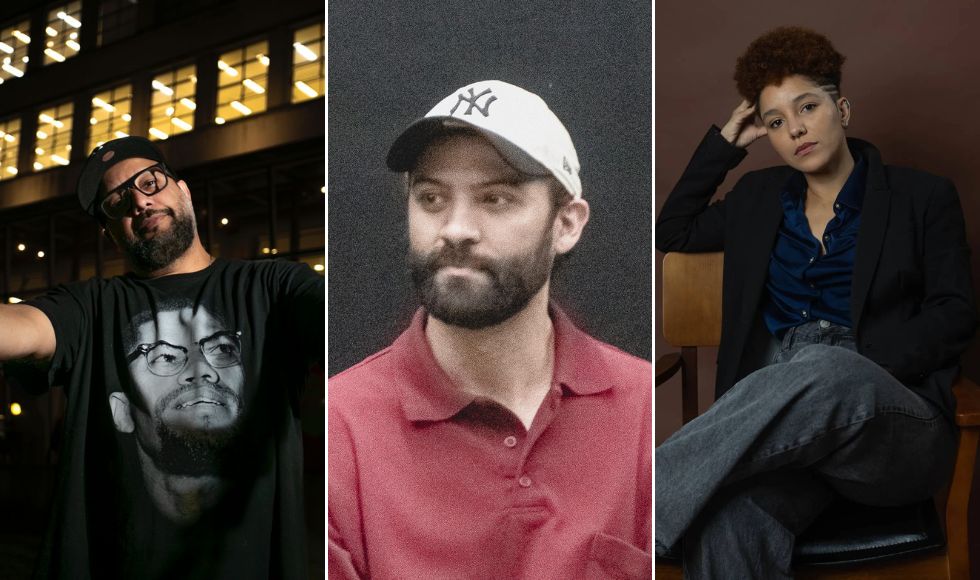
WITH Gizelly de Paula and Eugênio Lima
MODERATED BY William Santana
- March 10, Tuesday, 4pm–6pm
- iBT – Brazilian Institute of Theater | Praça Stage
- The event will feature Brazilian Sign Language (Libras) interpretation
- Free | Ticket reservation via Sympla
SYNOPSIS
This panel approaches the Black Experimental Theater (TEN) not as a “historical landmark,” but as a force still active in the present. The conversation proposes viewing TEN as a field of disputes: what was remembered and what was erased; what was documented and what remained as practice, body, and orality. Between research, training, and legacy preservation, Gizelly and Eugênio discuss how to transmit a repertoire without museumifying it, how to keep a scenic thought alive without reducing its complexity, and how TEN’s permanence is measured less by celebrating the past than by its ability to reorganize language, audiences, and institutions today.
BACKGROUND
Gizelly de Paula is a stage artist and professor at CAL School of Performing Arts. A researcher in Black Theaters, with emphasis on the legacy of the Black Experimental Theater (TEN) and its pedagogical and aesthetic potentials. She created the course Acting Black Theaters, focused on Afro-referenced acting practices, and is currently pursuing a master’s degree in Contemporary Art and Culture (UERJ), supported by a CAPES fellowship.
Eugênio Lima is a DJ, actor-MC, director, and researcher of Afro-diasporic culture. He is a founding member of Núcleo Bartolomeu de Depoimentos, Frente 3 de Fevereiro, and Coletivo Legítima Defesa. He received distinctions such as the Shell Theater Award for Best Music for Terror and Misery in the Third Millennium (2020) and Frátria Amada Brasil: A Small Compendium of Urban Legends (2006).
William Santana Santos was born in Bahia and is a researcher, curator, and cultural producer. He holds a degree in Social Sciences and a master’s in Sociology from USP. He is currently a PhD candidate in Sociology at FFLCH-USP, developing the research project Race and Modern Theater: The Trajectory of the São Paulo Black Experimental Theater (TENSP), 1945–1966. He is a member of USP’s Center for Sociology of Culture.